In the sector about to be allocated to the 2nd Division, the British had been making plans to attack the German positions around St. Eloi. To this end they had constructed tunnels more than fifty feet under no-man’s-land, filled them with explosives and planned to initiate their attack by blowing up the mines and attacking in the confusion that followed.
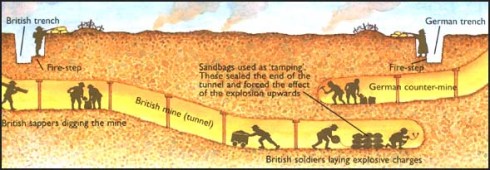 While it would have been preferable to wait until all troop movements had been completed, the danger of having the tunnels discovered by the enemy made it imperative to move ahead with the operation as soon as the mines were set. In addition they knew that the Germans were laying mines too.
Beaverbrook:
“Therefore it was decided by the higher authorities to send the 3rd British Division to the attack opposite St. Eloi on March 27 and to bring the 2nd Canadian Division up to their support and relief as soon as the first stage of the fighting was over. The mines were exploded with cataclysmic effect and six huge craters full of dead and wounded Germans took the place of the enemy’s front trenches. The British troops moved forward through the crumbled debris of the craters and were able to establish themselves about 400 yards in front of their line and about 200 yards beyond the craters.”
McBride:
“It was the most appallingly magnificent sight I have ever witnessed. There was little noise but the earth appeared to writhe and tremble in agony. Then, it seemed in the dim light, the ground heaved up until, bursting all bonds, earth, trees, buildings, trenches and men went skyward. Immediately great clouds of flaming gas followed, expanding and growing like gigantic red roses bursting into full bloom.”
21st War Diary:
“Mar. 27 – The Battalion ‘stood to’ in the GHQ second line trench (Bois Carre) from 3 AM to 6 PM in consequence with the operation on our left. At 4:15 AM, mines were exploded by the English Division and all batteries opened fire. Many German prisoners passed through our area. Casualties – Nil”
4th Brigade War Diary:
“Mar. 27, 5:15 AM – 21st Battalion reports 3 shells in Bois Carre.”
The 20th Battalion also ‘stood to’ and Corrigall wrote:
“It was a fine morning, with not a breath of wind. The stillness was unbearable. The first sound to break the silence was the ‘zoom’ of a long-range shell, and then came a muffled roar. Yellow flames belched from the St. Eloi mound and the earth trembled as the mines exploded. The air was rent with shrieking shells from our guns. The noise was terrifying.”
McBride:
“It was a magnificent spectacle for those of us who were in a position to view it. To the enemy it must have been something beyond any description, as the mines were laid in a line that cut off a large corner of their line and took in their first and second lines for a distance of some six hundred yards. Whatever force they had in those trenches was simply annihilated.”
Corrigall:
“It was nearly five minutes before the German artillery opened fire. Then a storm of shells burst loose upon us, cracking viciously as the salvoes tore through the trees near the ‘P’ and ‘O’ trenches and Bois Carre supports and into our sandbag parapets. While we crouched under cover, several gaps appeared in our trenches. One shell killed a man in ‘C’ Company and wounded three others.”
McBride:
“The rapidity with which the enemy got into action indicated that he was expecting something. When they did open up, they gave us the greatest demonstration of accurate and unlimited artillery fire, which any of us had ever seen. The air seemed to be literally full of shells bursting like a million fireflies. Our parapets were blown down in a hundred places and the air filled with flying sandbags, iron beams and timbers. A shell struck under the gun by which I was standing and flung gun, tripod, ammunition box and all, high in the air. I had to laugh as it spun around in the air, with the legs of the tripod sticking stiffly out and the belt of ammunition coiling and uncoiling around it like a serpent. When it landed back of the dugout, we found that it was unbroken and we had it firing again in twenty minutes. I walked down the trench to get a spare barrel when a shell struck about ten feet in front, killing a man. I started on and another lit exactly where I had been standing. During that trip of perhaps fifty yards and back, I was knocked down and partly buried no less than four times. Men were killed all around us.”
Historian Desmond Morton says that men needed to form friendships in the trenches because that was the only guarantee that a man had that someone would help him, if wounded, or seek his body, if dead.
Frank Maheux tells us about his chum Anderson at St. Eloi:
“A piece of steel cut him pretty near in two. He never knew what happen to him. I made a promise I won’t touch liquor for three years and make a trip to Ste. Anne de Beaupre. Two men shot each other in the leg so they got off from the army for a while, but they will be punish. I saw poor fellows, but thank God only a few lose their nerves – the same like crazy men, you can’t do nothing with them.”
A British soldier named Bruce Bairnsfather described a similar artillery assault:
“I heard the enormous, ponderous, gurgling, rotating sound of large shells coming. I looked to my left. Four columns of black smoke and earth shot up a hundred feet into the air, not eighty yards away. Then four mighty reverberating explosions rent the air. Then I heard a colossal rushing swish in the air, and then didn’t hear the resultant crash. All seemed dull and foggy; a sort of silence, worse than all the shelling, surrounded me. I lay in a filthy stagnant ditch covered with slime from head to foot. I started to tremble all over. I couldn’t grasp where I was. A shell had blown me up. I lay there with a most peculiar sensation. All fear of shells and explosions had left me. I still heard them dropping and exploding, but I listened to them and watched them as calmly as one would watch an apple fall from a tree. I tried to get up and then I knew. The spell was broken. I shook all over and had to lie still, with tears pouring down my face. My battle was over.”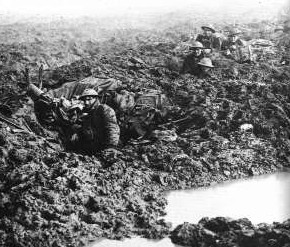
6th Artillery War Diary:
“One captured German officer stated to Lieutenant Armitage that, out of his company of 260 men, about 200 were blown up when our mines exploded.”
McBride:
“When German prisoners were told they had to move overland to the reserve trenches, they were reluctant, because their own artillery was raising hell all over that section. It required threats and a display of bayonets to get them out of the trench and on their way. Several of them came close to establishing new world’s records for the distance. When they arrived at the second line, they went in head-first like divers going into water.”
Corrigall:
“When daylight came we could see German prisoners running towards Voormezeele. At 7 AM, after nearly three hours of shelling, the artillery fire on both sides slackened. We moved forward to the lip of the biggest crater – No.2 – and were immensely impressed by the power of mines. A whole company could have been concealed within the inverted cone.”
Imagine how the men of the 4th Brigade must have felt that morning, waiting shoulder to shoulder, knowing that they might have to go into their first full-scale battle, with only a sketchy plan and no detailed knowledge of the terrain. When they stood down at night it must have been with a huge collective sigh of relief. But the 21st replaced the 20th in their trenches the next night.
Earlier that day a Canadian private recorded:
“When day broke, the sights that met our eyes were so horrible and ghastly that they beggar description. Heads, arms and legs were protruding from the mud and dear knows how many bodies the earth swallowed. At least thirty corpses were showing in the crater and beneath its claylike waters other victims must be lying killed and drowned.”
The act of defending corpse-strewn shell holes was a frightful dose of reality. The enemy artillery, while a bit slow in reacting, tore the earth apart so that there were no longer any recognizable landmarks and the system of trenches ceased to exist, other than as scattered, unconnected potholes. Immediate efforts were made by the 2nd Canadian Pioneer Battalion and six hundred reserve soldiers to reestablish some system of communication and forward trenches. The next day, German artillery did its best to hamper that work.
Maheux: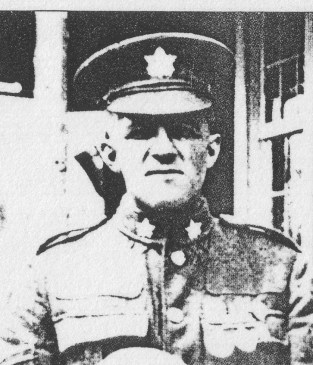
“ We were walking on dead bodies and there was about three feet of mud and water. I saw poor fellows trying to bandage their wounds; heavy shells were falling all over them. Poor Angeline, it is the worse sight that a man ever want to see, but thank god I went through without a scratch. I saw fellows dropping all around me and nothing touch me; steel and pieces of iron were falling like snow.”
Not all Canadian troops were idle during the March 27 attack.
4th Brigade Order:
“The Light TMB will engage and destroy machine gun emplacements at …”
This was to the left of the “N” and “O” trenches, up a gradual slope toward St Eloi.
4th Trench Mortar Battery War Diary:
“Fired 82 rounds cooperating with brigade on left.”
This must have been successful because the British General sent the following dispatch – “The handling of the trench mortars reflected the greatest credit on the officers and men concerned.”
It would appear that Bill and Keith and their new comrades distinguished themselves in their first big test as a new unit.
McBride:
“For many days we had endured such a hurricane of shells as should have annihilated any force. Our parapets were blown down and dead and wounded were lying all around. Casualties mounted so fast that, even with extra help, it was impossible to evacuate all the wounded. As to the dead, it was out of the question to even think of moving them, so we laid them up, out of the way, on firing steps or parados- anywhere so we did not have to step on them.”
In the Canadian Division in March, casualties jumped to five officers killed and twenty-nine wounded; one hundred and thirty-six Other Ranks killed and six hundred and ninety-six Other Ranks wounded.
An untried Scottish unit moved into the front lines against the enemy. McBride said that was the first time he ever heard the bagpipes in battle. McBride:
“Man! If you have never seen it, you can never get the thrill. Marching along as though on parade, never missing a note or a step, skirling those wild heartrending airs that date back to the time of Bonnie Prince Charlie, they marched into battle as though no such thing as bullets or shells existed. I cried like a baby as they walked into that fight, scared though they were, with their chins up and their rifles ready. They did not last long, but they performed gloriously while they were there. But the shells got them eventually, as they get everybody who stayed too long in one place. That six-hundred yard bit of ground claimed more than 10,000 lives during that week.”
For several days there was considerable action on the left of the 21st and conditions in their area were more active than normal. One man was killed – T. Balsdon – and five wounded during the next three days. The Trench Mortar Battery (TMB) built two gun emplacements on the 29th and fired forty rounds over the next two days. The picture is of a New Zealand battery but is a good example of what a trench mortar emplacement looked like.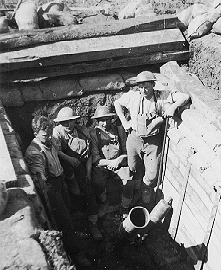
21st War Diary:
“Apr. 1 – Our grenadiers cooperated with Trench Mortars in a combined shoot on enemy front and second line trenches. Huns responded with about sixty fish-tail grenades and heavy machine gun fire.”
The TMB then retired to a rest area for the next six days, where they received six Stokes guns, 600 rounds of ammunition and 14 new men. The last two days were spent on training to use the new Stokes Mortars. While they were out, two parties of volunteers from the 21st assisted British troops on April 2 and 3 in assaulting and capturing Post 65. Two men were killed and 14 wounded.
Beaverbrook:
“The frontage at St. Eloi was between 600 and 1,000 yards, and against it was directed, for over three weeks, a colossal concentration of German fire, answered shell for shell by our own artillery. Because of the artillery action and the mine explosions, the whole face of the country was altered to the extent that a British officer left behind to assist confessed himself ‘utterly unable to recognize anything’. In this battered soil was nothing but mud. Every shell hole was a pond, every step found one up to the waist and the trenches fell in from the flood as much as from enemy fire.” (Unidentified soldiers in a flooded trench –below)
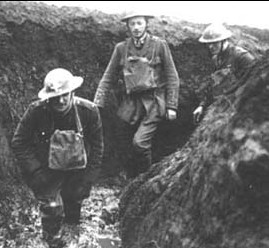
Furthermore, many of the communication trenches were impassable and access to the trenches that were still usable was mostly limited to each end of the front, creating
traffic confusion and upsetting trench routines.
Beaverbrook describes the condition of a British Brigade:
“Apr. 3 – As troops of the Canadian 3rd Division slipped and struggled along the wretched drains or clambered over the places where shell fire had destroyed them, they came upon everywhere the men of the 61st Brigade in a state of considerable exhaustion. They had been fighting a continuous general action for five days under terrific shell fire. The last push left the British in such casual shelter as they could obtain, encumbered with the dead on both sides and with their own wounded, which they were unable to evacuate. A firing trench with no way in or out from the rear exposes its occupants to every horror and hardship and danger. The supply of food, water, and ammunition is intermittent and uncertain, while the knowledge that supports may take hours to come up in case of attack is added to the mental torture and physical staleness induced by the persistent bombardment by heavy guns. But the presence of wounded men in a crowded trench passes the limit of horror. The dreadful nature of the injuries inflicted by high explosive, the irrepressible cries and moans of pain and the impossibility of bringing relief to the sufferers form a combination of sight, sound and sensation which, if protracted for many hours, absolutely unnerves the unwounded survivors and forms the nightmare of their sleep for many years. The Canadians discovered that the officers of the 61st, through no fault of their own, but owing to the lie of the ground and the conditions of the assault, could tell them practically nothing about the whereabouts of the enemy. They did know that there was a sparsely defended gap in their own lines between them and the 31st on their left.”
Despite frequent heavy German attacks, the new line of defence still held beyond the craters,. Plans to attempt to repair and consolidate the Allied trenches were put into action but were unable to be carried out due to the necessity to evacuate the wounded and because a violent artillery barrage further destroyed the trenches and killed more than two-thirds of the ninety men occupying them. Due to the lack of cover, only about forty men were left on the night of April 4 to defend the position of a strong company of two hundred.
4th TMB War Diary:
“ April 6 – Received Stokes Guns and 600 rounds of ammunition.”
Although Bill and Keith likely had no way of knowing this, an enemy attack at 4 AM on April 6 drove the 6th Brigade back to their lines of ten days before.
Beaverbrook:
“Dark forms advancing could be seen through the mist. Instantly every gun and rifle, which would work, was brought to bear. But the result was one to break the hearts of men trained to regard their weapons as their unfailing friend in the hour of need and danger. The foul mud splashed over them in torrents by the bombardment had worked its way into breech and magazine, and men threw down their choked rifles with curses, and snatched one left behind by some dead or wounded man. But these too refused to do their work. All along the line the remaining Lewis guns jammed. 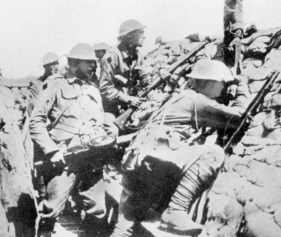 (The Lewis gun held by the British soldier on the left of the picture was a light machine gun weighing about twelve kilograms, with a magazine of forty-seven cartridges and was used by the infantry in the trenches). There were not enough troops to make a concerted counter-attack with bayonets so the Germans passed along our front until they found a gap in the line. Some final Lewis gun fire slowed them down but when it went out of action, the enemy jumped up and headed straight through the undefended breach to the craters 150 yards behind.”
The situation now was that there were pockets of Canadian troops behind the Germans, telephone communications were interrupted so frequently that the Command Centre was unsure of where people were and how they could be helped and enemy shelling was so severe on the communication trenches that fresh troops could not be brought up. It was further complicated by the fact that they thought they were dealing with only a small German raiding party, surrounded by our troops, and the mistaken belief that we still occupied Craters 4 and 5, when in fact we were in Craters 6 and 7. From behind the German advance, Lieut. Browne of the 22nd Battalion, with no working rifles left, decided to retreat to the old trenches. When the party of about ten found the trenches, not only were they empty, but also they were guarded by wire. 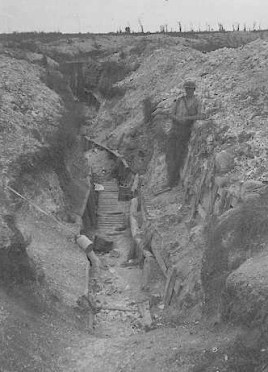 While struggling through the wire, they were fired upon and several men were injured. Shortly after they met a small digging party and had them join in a hand-to-hand battle that ended in the German firing party being killed with rifle butts. Dodging the enemy and picking up stragglers on the way, they managed to reach a Canadian outpost. As it turned out this post was entirely surrounded, but, aided by Canadian machine gun fire, they were able to scramble to safety.
There were several factors that had brought the Canadians to this state. Before the battle started they were not aware that there was an unusually heavy concentration of German artillery against them and that it was positioned in such a way as to be able to inflict maximum damage. The whole area was quickly laid waste, including support and communication trenches. This created the need to move troops further behind the front lines. However, when it became necessary to move them forward again, they had to struggle through virtually impassable mud that was often up to their armpits. This same mud made creating new or repairing old trenches impossible and often the only shelter was a shell hole.
McBride:
“Voormezeele, a town of several thousand inhabitants before the war, was now a pile of ruins.
Bus House was now a pile of brick and timbers and so was Shelley Farm. Where St. Eloi had been was nothing but a barren waste. Not a sign of a house or any part of a house was visible; not a brick remained and even the fine stone paved roads had been obliterated. Where there had been hedges or trees there was nothing but a desolate expanse of mud, which, from a distance, appeared to be a smooth level plain. For 600 yards back of our front line there was not a shrub or tree or bush nor any landmark of any kind. Every inch of this ground had been churned over and over again by shells. The whole area was simply a continuation of shell craters, joined and interlocked without a break. Where our communication and support trenches had been it was just the same. And every hole was full of water. To traverse this, one must wade and flounder through liquid mud waist deep and sometimes deeper. Eventually we were forced to rebuild our front line in approximately the same position as before the start of the fight.”
As a result of a major counter-attack, many 4th Brigade units including the TMB were called to ‘stand to’ at 5:15 PM at Reninghelst on April 6. At 6:05 they were told to return to quarters and then at 6:35 to “stand to’ again. At that time the 5th Brigade was ordered to move forward to assist the 6th Brigade that was occupying the front trenches. At 11:35 AM the 21st Battalion and elements of the 4th Brigade also moved forward. At 11:55 AM, the TMB, along with Battalions 19 and 20, was told to be ready to move at 1 PM but the TMB stayed and continued training, while the Brigade Machine Gun Battery moved out with the battalions instead.
Corrigall:
“At 1:30 PM we marched from Reninghelst towards Dickebusch by way of Ouderdom, a distance of four miles. About a mile from Dickebusch a halt was made, and we, along with the other battalion in front of us, were ordered to extend in lines of companies along the fields. A cloudy sky foreboded the deluge during the evening. By 4 PM it was almost dark, the atmosphere sulphurous and the air smelling of decay; a little later night fell black as ink and the rain began. We lay down in the mud to rest.”
Reninghelst is at the left side of the map to the right of ‘elst” and St Eloi is near the right edge, half way up.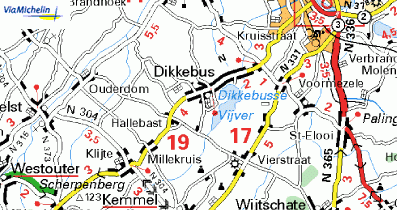
On the morning of April 7, 1916 the 4th Canadian Brigade officially assumed command of their new front from the British.
Beaverbrook:
“Dawn found the Canadian Infantry still entrenched in Craters 6 and 7, but with no visible progress towards the enemy positions. The attack parties had lost their way or been overwhelmed by sheer exhaustion. With Germans in Craters 4 and 5, a distance of less than forty yards can only have separated the enemies. In fact, a few German patrols, as much confused as their opponents, walked straight into the Canadian craters in the dark and were taken prisoner. And yet neither side succeeded in coming to grips with the other. It was as though an impenetrable curtain had fallen between the contending parties of infantry. It cannot be questioned that if we had been fully aware of the relative positions of the two forces, the British artillery could have blown their opponents out of the craters.”
That night the 4th Brigade relieved the 6th Brigade at the front, with the 21st on the right facing No.1 crater, the 18th to their left facing craters Nos. 2 and 3, the 19th on the far left extending to the canal and the 20th in reserve in Dickebusch and Scottish Wood. Craters 2, 3, 4 and 5 can be seen, along with a general outline of the trenches, in the picture (taken from the German side) of St. Eloi on page 52. The 4th Brigade was ordered to take Crater No. 2 on the night of April 8, while the 20th ‘stood to’ from 11:45 PM until 7AM.
McBride commented that, even though they had been trained for battle and actually had spent quite some time in the trenches, it was a very different thing to move out of a trench to the attack:
“Tramping, creeping or crawling over the hellish desolation which is a battlefield, amid the crash of bursting shells and the wild screams of the ricocheting fragments, the crack and whistle of bullets amid smoke and dust, is different. He must learn to take advantage of all available cover while keeping up with the advance; he must learn to seek out individual targets and deliberately fire at them. It is too much to expect that any human being, when first exposed to such an ordeal, can properly control himself and settle down to anything approaching clear-headed, logical thinking. His only thought is that he is bound to ‘get his’ the minute he sticks his head over the top. After a few such performances, if he survives, he knows there is quite a lot of space between the bullets and shells and he has at least an even chance to miss them. When that time comes, he is eligible for the description of a ‘trained’ soldier – a veteran. It seems a pity that the expression ‘Over the Top’ has been so cheapened. To the soldier it is an event of the most tremendous meaning- the very apotheosis of war. To endure the tense hour of waiting, the zero hour and then, in the gray dawn and amid the thunderbolts of steel and the sleet of bullets, to climb up and advance- it requires something more than the willingness to buy a Liberty Bond.”
Colonel Jones of the 21st Battalion described the operation to Brigade Headquarters :
“I have the honour to report that at 12 midnight 22 bombers under Capt. Miller and Lieut. Brownlee attacked No. 2 crater. Capt Miller reported to me that immediately his first bomb was thrown the enemy opened on him with heavy rifle fire and bombs, so much so that he issued an order to retreat. Following this party of bombers, thirty-eight men under Lieut. Bowerbank went forward carrying bombs, sandbags and shovels for the purpose of digging themselves in on the northwestern side of the crater. (It seems ludicrous that staying alive might depend on having a shovel.) This party retired on Capt. Miller’s orders when the bombing party returned. Men of these parties report variously that the enemy outnumbered our troops – estimates running from 5 to1 to 10 to 1. At 2:40 AM, I issued an order to Lieut. Brownlee (Capt. Miller having been injured) to reorganize the attack and gave him two hundred men and Lieut. Goudy. I ordered this party to advance at 3:30 AM and make a bayonet charge. (I just can’t imagine what it would be like to order men to make a bayonet attack at night or how the men would receive such an order.)
At 3:20 AM the supporting artillery shelled the trench. As the first platoon reached the assembly point for the attack, they were met by heavy shell fire, causing several casualties. This fire disorganized the attack, which was not launched and, owing to the nature of the ground and heavy shelling, it was reported to me that organization was impossible. At 3:40 AM, thinking that the party had advanced, I ordered another party of fifty to be organized and advance to the northwest side of No. 2 crater and dig themselves in. This party was cancelled before it was assembled because it was becoming light. I issued the order to cancel operations at 4:25 AM. Casualties estimated at two officers wounded, three Other Ranks killed, twenty-one Other Ranks wounded and three Other Ranks missing.”
4th TMB War Diary:
“April 9 – Locating emplacements on new brigade front. Enemy fire heavy.”
4th Infantry Brigade Order;
“Three Stokes guns will be placed at O and will, at zero time, bombard the southern lip of Crater 2 and also a portion of the German trench near point 96. One Stokes gun will be placed so as to fire effectively on point 76. The remaining two guns will be in reserve at St. Eloi.”
That night the 4th Brigade was ordered once again to take Craters 2 and 3. To illustrate the difficulties that were encountered leading up to this attack, let’s follow the 20th Battalion, which was still in the reserve area. In late morning they sent out a scouting party to reconnoiter the front line at St. Eloi. Enemy shelling hampered their effectiveness and they were unable to return until late that night. In the meantime orders were received around 5 PM to join in the attack to start at midnight; to work with the 21st Battalion to recapture Crater 2. This would mean that all four battalions would be in the front- double the normal complement, but covering the same frontage. The objective was to come at the Germans from three sides and drive them out of the two craters. In order to select the four officers and one hundred Other Ranks from the 20th Battalion for the attack, Major Rorke summoned all the officers to Battalion Headquarters in the Doctor’s house in Dickebusch.
Corrigall:
“ It (the doctor’s house) stood alone and undamaged about a hundred yards west of the row of houses in the village. In the once carefully tended garden, weeds were springing up in the pathways and the hedges were overgrown. On the house itself moss clung to the brick walls and red tiles and flakes of loosening paint hung from the green doors and shutters. There was one large room at the centre of the cottage, in which the officers collected, with two smaller rooms on each side. Although the furniture still remained, the clammy atmosphere and damp flagstones, telling of long desertion, lent the whole place an inhospitable air.”
Two parties of bombers and two working parties, assigned to dig in and consolidate any gains made by the bombers, were to meet at Scottish Wood (top left on the map below) at 10:30 PM. One bombing party was already at Scottish Wood and the working parties had to pick up shovels and sandbags at Voormezeele.
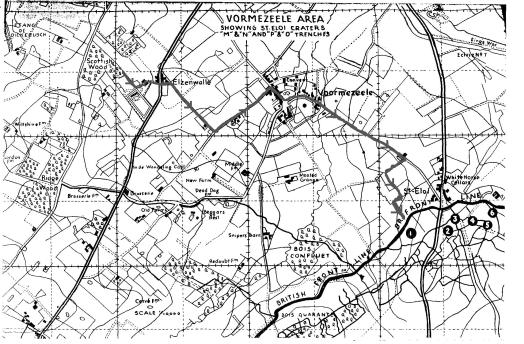
At 9:50 PM the Division issued instructions that the new, varnished red cartridges for the 3-inch Stokes Mortars should not be used until further orders. I wonder if there had been malfunctions, which might have resulted in injuries to men such as Bill and Keith?
Corrigall:
“It was 9 PM before parties 1,3 and 4 left Dickebusch. No time was lost in getting to Scottish Wood, but the darkness had caused some delay in getting the orders to the troops scattered throughout the woods and party 2 was not ready. It was 11 PM before the whole party started out. They reached the 18th Battalion Headquarters at 11:45 PM, where they were told that the operation had been postponed until 2 AM because of lack of information and time to prepare. Scouts, sent out to obtain information on which to prepare a detailed plan of attack, had not returned nor had the necessary bombs arrived. They were still about a mile and a half from their assembly point. When the bombs arrived, Col. Wigle gave them orders to follow the St. Eloi road to ‘Bus House’, and then take a trench to the right until they reached the front lines, where they were to await ‘zero hour’.”
From the map it seemed simple enough, but none of the officers had ever been there and there was only one guide available to lead them forward in the pitch dark. They started at 1:30 AM, being handed bombs as they passed along the road to St. Eloi and entered the trenches pointed out on the map. Based on scouting reports, which said that the enemy was very alert and well protected by wire, the Commanding Officers of the 18th and 19th Battalions recommended that the operation be cancelled. But, with only a few minutes left to ‘zero hour’, Brigade said it was too late to stop the 20th and 21st parties.”
4th Brigade Message:
“At 1:55 AM all parties in position and Stokes Guns opened fire.”
4th TMB War Diary:
“April 10 – At 1:55 AM, Fired 150 rounds on craters 2 and 3 at 400 yards, supporting 4th Brigade in attack on craters. One Other Rank killed and two wounded.”
The C.O. of the 18th Battalion later claimed that the Stokes Guns fired five minutes early, thus hampering their planned advance. Bill and Keith’s new unit suffered their first casualties and they continued at the front for the next two days.
Corrigall:
“The leading party of the 20th had barely reached the front line, while the other three were extended in the communication trench as far back as ‘Bus House’. Only Lieuts. Belt and Anderson, with fifteen men, jumped off.”
Barrages of artillery kept this party from more than a cursory examination of the crater, whose outer rim the Germans seemed to be occupying. The enemy was bombing and machine gunning and the party returned to their old trenches and dug in until dark that night. Six men were missing and several were wounded. When the artillery barrage slackened, the men of parties 3 and 4 did what they could to provide shelter. Nothing had been accomplished.
McBride;
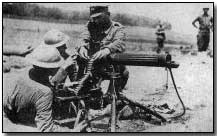 “Troops came in and troops went out, but the Emma Gees (machine gunners) held on, forever, as it seemed to us. But few remained of the original gun crews. Not all had been killed or wounded but it had been necessary to relieve some who were utterly exhausted. How I kept going was a mystery to me, as it was to many others. I was nothing but a cold-blooded machine. Good friends were killed but I gave them no thought, other than to get the bodies out of the trench so we need not step on them. I was hit, slightly, on several occasions but never severely enough to necessitate my going out. My leather jacket and my tunic were cut to shreds by bits of shell, a bullet went through my cap and another grazed my head so close as to raise a red welt but I was not seriously injured.”
Beaverbrook:
“But here again all assaults from the north broke down utterly. The men simply could not get on, and came staggering back into the line at dawn with heavy casualties and in a state bordering on collapse. But three privates of the 19th held an advanced machine gun emplacement for seventy hours without repose or relief. Lieut. Thompson of the 20th helped to dress wounded men though he had been shot in the leg. At dawn it took him four hours to drag himself back for first aid. Brigade messages had been sent forward saying ‘You must get on at all costs’. By night the darkness and the chaos of earth and water enveloped each succeeding party before they could come to grips with the enemy. Small parties were wandering around trying to find their location in vain. The survivors returned almost fainting with exhaustion. Some were left behind in small holes as day broke. Private Warn of the 29th Battalion lived alone for nine days, subsisting on the rations and water bottles taken from the bodies of men killed in the fighting of the last days of March. He rejoined his unit in safety after his long sojourn with the dead. Man had done his best but had been defeated by nature.”
21st War Diary:
“April 9 – In spite of vigorous German bombardment, we succeeded in capturing Crater 2 and helped establish a garrison in the old German front line trenches. Casualties – two Officers and twenty-eight Other Ranks, killed wounded or missing.”
Although they were close, they had not in fact captured Crater 2, but Lieut. Brownlee had led a strong party of bombers that recaptured Crater 1. Then, moving to their left, they dug in and consolidated a position about half way to Crater 2.
On April 10, at 7 PM, Lieut. Morrison, who commanded the 4th Trench Mortar Battery, was told to:
“Report to Voormezeele to the 18th Battalion with two Stokes Guns and a good supply of ammunition tonight. Move as soon as possible.”
McBride:
“On two occasions I made the complete circuit of all the craters at night, going through the Canadian Trench and coming back via what had been our original front line. On one of those trips, Captain Cosgrove accompanied me. Sometimes we met individual German sentries and quick, quiet and accurate work was necessary to avoid detection. I found that a French bayonet was a very satisfactory weapon at such times. After leaving me that night, Captain Cosgrove came upon a party of eighty-two Germans, who had been cut off in one of the craters for several days, without food or ammunition, and captured them all single-handed. What had been left of the village of St. Eloi was rapidly disappearing under the hail of shells. Where our original front line had been, there remained but few detached fragments of parapets. At one point, on our left, there was a hole in the line at least two hundred yards wide. Time after time the Canadians retook the craters, only to be literally blown out of them by the ensuing hurricane of shells. The task of getting out the wounded was heart breaking. Our own stretcher-bearers worked day and night, 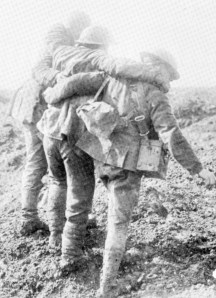 (It might have looked like this) but they had suffered many casualties and were unequal to the task. It was impossible to remove the dead and they were buried in shell holes where they fell. During the succeeding days, many were disinterred by other shells.”
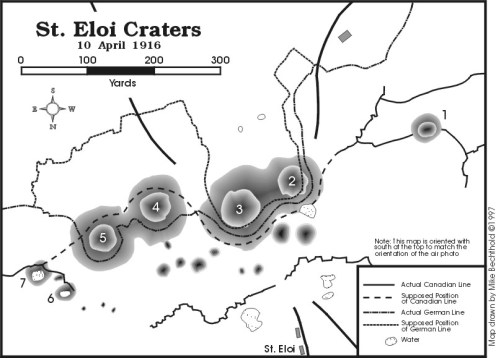 The map indicates the situation on April 10 (This time looking from the Canadian side). It is clear that the Canadians thought they were occupying craters 4and 5, but in fact were not. In this day and age of mobile telephones and Global Positioning Satellites, it is hard to comprehend what the chain of command was faced with. Every telephone at the front had to be hard-wired to the command post of their battalion and the battalion to the brigade and so on up the chain of command. Enemy shelling continually destroyed communication lines, which would then have to be reconnected. Bad or inadequate information led to very bad decisions.
Corrigall:
“We relieved the 21st on the night of Apr 10. Some trenches were destroyed and it was impossible to hold parts of the line so a block was made in front of Crater 1. From this block for quite a distance in front of Craters 2 and 3, the earth was pulverized and the trenches obliterated by shell fire. No garrisons could occupy this gap.”
McBride:
“On the night of April 10, we were relieved by the 20th Battalion and went out for a rest. I had not laid down to sleep for fourteen days, snatching what rest I could, for fifteen or twenty minutes at a time, leaning against a parapet or propped up in a corner. We stopped in the ruins of the convent school, and, dropping on the stone floor, slept like the dead for twenty-four hours. The next night we made our way to where the battalion was in billets, near Reninghelst, where I immediately ‘flopped’ for a straight forty-eight hours’ continuous sleep. After that a bath, a shave and general clean-up, supplemented by a good hot ‘feed’, made me as good as new. During the two weeks up front we had had no warm food, nothing but ‘bully and biscuits’ and occasionally, a can of ‘Macanochie’ – a ration of prepared meat and vegetables, which is excellent when served hot but not very palatable when eaten cold.”
Their first major battle had dealt a blow to the 21st, as Lieutenant A. J. H. D’Arcy, P. Burke, N.J.Clifford, D. Ingram, S. Guild, U. Loiseau, J. E. McGill, S. Moody, T. R. Poffley, S. H. Rudge, J. Scott, A. Teale, R. Tinkess and W Tyre were killed or died of wounds.
Corrigall:
“Many roads centered on Reninghelst. In this quiet place one could sometimes almost forget the war. The pale green of the spring was giving new colour to the hedges and poplar trees, to the rolling hills and valleys of cultivated land and pasture. Smoke still came from the chimneys of houses whose owners worked in the fields about them and under the shadow of the windmill to the south of the village. To the west of the windmill stretched the huts of battalion camps sufficient to accommodate two brigades.
But the peace and quiet were deceptive, and their impression on us was fleeting. The people were kind, their homes comfortable, but the signs of war were everywhere. Near the road to Locre, which passed through the camp area, stood a YMCA concert hut and canteen.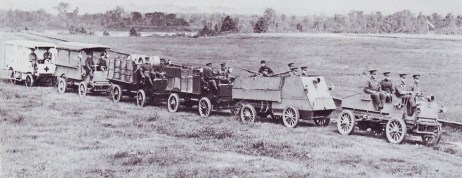 Motor transport columns (this is what motor transport of the day looked like), ordnance workshops and supply depots were beside the road to Poperinghe; engineer dumps, railway sidings and artillery parks along the road to Ypres; horse lines, labour camps and salvage stores along the road to La Clytte. We were resting, but for a moment, and in the midst of war.”
2nd Division Orders:
“Apr. 11 – The six 4th Brigade Stokes mortars now in the line will not be relieved tonight. The personnel and mortars will be handed over to the 5th Brigade and arrangements for their relief will be made later. Apr. 14 – Brigade CO instructs officer in charge of 4th Brigade TMB that every effort should be made to train more Stokes Gunners at once. Apr. 15 – Officer in charge of TMB reports that 20% of green cartridges are useless.”
The men must have had very unkind thoughts about the factory that assembled those cartridges. Every day from the 11th to the 15th the weather was reported as ‘wet and stormy’. So the wading and floundering through mud would continue.
The 20th made another attempt to capture Crater 2 on the night of Apr. 11. First the crater was targeted by artillery and then they moved along the trench from Crater 1 to 2. They soon discovered that the artillery fire had missed the crater and the Germans occupied it in force and had set up a machine gun emplacement, pointed right down the trench they were using to attack. They returned to Crater 1 to get further instructions and, while waiting to hear from the Brigade, the phone line was blown up. This situation was repeated everywhere, as communications between Battalion Headquarters, companies, platoons and small groups of men, were constantly interrupted. This often meant that soldiers in the field simply tried to dig into some place where they could wait out whatever was going on. In this case, the most that this patrol of the 20th was able to accomplish was to severely disrupt a German party attempting to lay wire in front of Crater 2.
On Apr.14, the same day they were asked to step up training, the TMB received 18 new men from the 4 Battalions in the 4th Brigade, and they spent the next five days ‘conducting classes’ while other members of the unit were still in the front lines. On the last of those days, two men were treated for shell shock. They might have been like two men seen by a reporter:
“I saw one convulsed like someone suffering from epilepsy. He was moaning horribly with blind terror in his eyes. He had to be strapped to a stretcher before he could be carried away. I saw another soldier shaking in every limb, his mouth slobbered and two comrades could not hold him still. These badly shell shocked boys clawed their mouths ceaselessly. Others sat in the field hospitals in a state of coma, dazed, as though deaf and dumb.”
The Trench Mortar Battery spent the following two days resting. On their second day back in the line – only a little more than one month since the unit had been formed – they received three new officers. Enemy artillery was described as very active and on April 26:
“Emplacements were destroyed by the enemy and the TMB ‘stood to’ in anticipation of a bombing attack by the enemy.”
The next day, they built new emplacements and that night the unit was relieved and spent the last three days of the month and the first week of May in rest billets. After the bathing and pay parades, there would be time for training in the morning, sports in the afternoon and concerts in the evening.
The 5th Brigade replaced the 4th and immediately worked to create and consolidate trenches to form a new front line. The ‘resting’ men of the 4th Brigade formed work parties and moved materials forward, dug trenches, positioned sandbags and strung barbed wire for the next week. For those in the trenches, the driving sleet and snow continued to batter them as they worked or huddled for warmth in ankle-deep water.
Beaverbrook:
“Some author will yet arise to sing the epic of digging. It is of all work the most tedious and dangerous; there is no glory in it; and an infinite amount of labour and risk. Yet the whole safety of the line depends on the exertions of the digging parties. A well-kept line spells comfort and security; a badly kept one is a purgatory to its occupants.”
It was not until planes had been able to fly again on Apr. 16 – they had been hampered by bad weather that had at one point been described as a gale – that the true positions of the Canadians became known. The men who thought they were in Craters 4 and 5 were actually in Crater 6 and another crater from a previous explosion, now called Crater 7. The next day the weather became ‘wet and stormy’ for the next three days.
Beaverbrook:
“It is easy to think of war as one triumph leading to another, but let it be remembered that the men who died at St. Eloi died no less nobly than those who fell at Ypres or Festubert and Givenchy.”
Armageddon:
“On the afternoon of April 19, a crushing bombardment buried the defenders of craters 6 and 7. ‘Our men were glued in the mud,’ wrote one of them. ‘The survivors were in no condition to fight, being dazed and shell shocked. All but a few of their rifles were clogged and useless.’ The few survivors surrendered. Turner’s division had lost 1,373. It was not a victory.”
The 21st had one more tour in the trenches in April from the 20th to the 24th and lost R. K. Anderson, A. J. Brooks, R. S. Charles, J. J. Cook, D. Trotman and F. Whitfield.
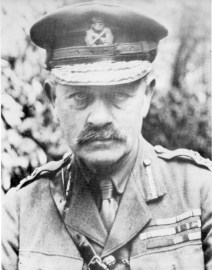 In the Canadian Division in April there were twenty-six officers killed, 126 wounded and three missing; 603 Other Ranks killed, 3346 wounded and 228 missing. After this operation, reports were requested at all levels to find out why things had gone so poorly. The end result was that several officers in the British Second Army were fired and General Julian Byng replaced General Alderson as Commanding Officer of the Canadian Corps.
The Canadian Military Heritage project says this:
“The battle of St. Eloi was the only occasion in the Great War when the Canadian Corps had to admit defeat. That the failure was due to bad staff work, the inability of regimental officers to read their maps properly and to the impossible conditions under which the fighting was carried on, is of little comfort to the men who lost their lives. The rank and file of the Canadian army fought at St. Eloi with a courage, a determination, a doggedness which could not have been surpassed; they did all that was possible, amid mud and rain and darkness, and the withering fire of machine guns, and the obliterating crash of the most intense shell fire they had yet encountered.”
 Stories