On December 14, 1916 that newly commissioned Lieutenant Nesbitt joined the 4th Canadian Mounted Rifles. “Mounted” referred to the unit’s past history as a cavalry outfit, but it was now an infantry battalion.
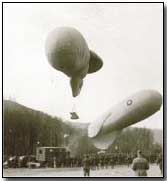
Here is a recap of the activities of the 4th before Bill joined them. On May 31, 1916, they had left their reserve position and moved by train to Ypres, and were guided to their trenches south of Sanctuary Wood which included high points known as Mount Sorrel and Observatory Ridge. They were to the right of a position they had held in March and found the trenches clean, dry and well fortified, but they immediately sensed the very familiar, unwholesome odour of decayed flesh. At dawn they were met with a beautiful clear day and had little activity to deal with, except to observe some enemy balloons (see below) in the sky.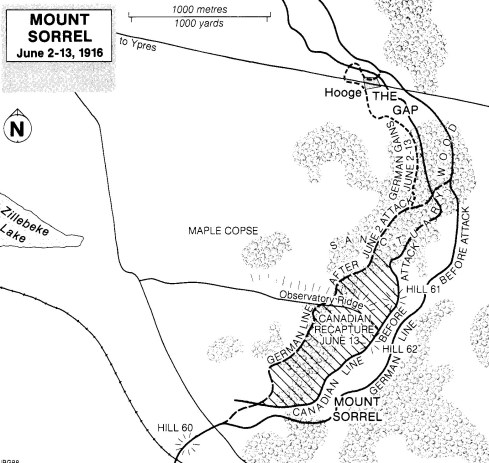
 There had been signs of exceptional activity on the German front, including a concentration of troops, battle rehearsals, heavier than usual artillery fire on key positions and the building of new trenches and saps. But there had been no definitive indications as to the point of attack, or when it might occur. The next morning, on June 2, the Divisional Commander Major-General Mercer, Brigadier Williams, Lieutenant- Colonel Ussher and their aides left Battalion Headquarters at 8 AM to inspect the trenches and saps.
4th Canadian Mounted Rifles History:
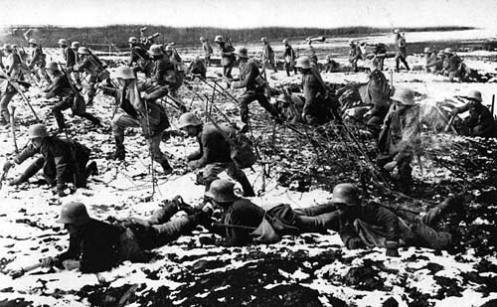
“Suddenly, without warning, from a heavenly, peaceful sky broke a deafening detonation and cloud of steel which had no precedent for weight and violence. Every conceivable type of gun, howitzer and trench mortar around Ypres poured everything it had upon the Third Divisional front. The most extravagant imagination cannot picture such a downpour of destruction. It continued in fullest intensity for four and one half hours. That anyone lived through it was a miracle. Trenches were soon demolished, shelters caved in and the ground was ploughed, beaten and pockmarked by shells. Areas, which a few hours before were verdant woods, were transformed into charred jagged stumps. At 1 o’clock the bombardment stopped and then came the volcanic roar of a mine. It hurled into the air a large part of the front line and its defenders. Sandbags, wire, machine guns, bits of corrugated iron and bits of men were slung skyward. Men manned the fire bays until they were blown out or buried under the debris; some searched for cover and a few went to the communication trench, only to be buried or taken prisoner in the defenceless trap. Then the German infantrymen appeared (coming out of their trenches and passing through their wire, as below).”
The few unwounded 4th CMR men fought as best they could until the Germans outflanked them and attacked from the rear. They made a desperate effort to escape, and a few did; the remainder were killed or taken prisoner. In the ensuing German advance General Mercer was later killed by artillery fire while lying wounded in a shell hole. General Williams, Col. Ussher, four Captains and two Lieutenants were taken prisoners and the 4th CMR Battalion suffered 637 casualties, leaving only 73 men to answer roll call on June 4th. There were only three officers left, out of the twenty-three who were in command two days before. The regiment had simply ceased to exist.
The London Times reported:
“The lines were held by a battalion of the CMR, and other battalions came up later to assist them through the barrage, and few things finer were ever seen in war than the way in which they came. A smoke barrage preceded the enemy’s advance. To the dazed and broken remnants of the men in our trench, the enemy was not visible until he was close at hand. Few of the men of the one Battalion who remained had any rifles left that were fit to use, even if the men had been fit to use them. But when they saw the enemy coming and close at hand, they climbed from the trenches to meet them and, some deaf and blind and staggering, they charged magnificently but pitifully to their death with no weapons but broken rifle butts, bits of entrenching tools and their fists.”
The Canadians lost some ground, then got some back on the 3rd, but could not hold it. Things were quiet for the next two days and then the Germans attacked again. Action during the next week consisted mainly of artillery bombardments, because rain prevented infantry raids. A Canadian counterattack on the 13th succeeded in recovering much of our lost ground over a span of about 500 yards wide. Total Canadian casualties were estimated at 10,000. General Byng wrote to his remaining troops:
“I am proud of the Canadians under my command. Their behaviour has been magnificent. I have never known fiercer nor more deadly barrage, nor have I seen troops fight with more earnestness, courage and cheerfulness.”
 Stories