Bill Nesbitt
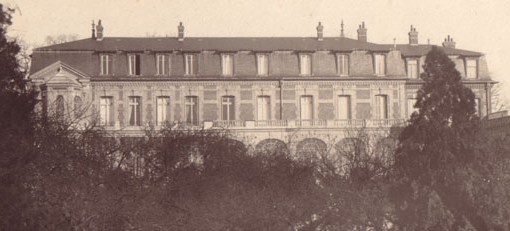
I believe this picture is of the No. 2 Red Cross Hospital in Rouen where Bill spent more than a month.
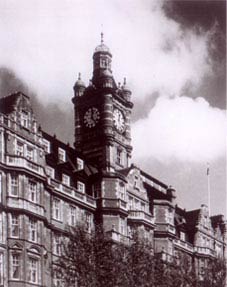 On December 2, 1917, he was put on the No.10 Ambulance Train for England and was attached to the Central Ontario Regimental Depot and admitted to the Prince of Wales Hospital for Officers in The Great Central Hotel (left), in Marylebone, London on December 4. While there he was assessed on December 28, 1917.
On that date his injury was described by a Medical Board in part:
“The whole track between entrance and exit wounds in the back was opened up. Much gangrenous muscle was excised and scapula was found to be fractured in the vicinity of its vertebral border. The wound is healthy and mostly healed. A long scar extends from spine to scapula along vertebral border. An area 2½” x 1 ½” above spine of scapula is not yet healed and requires dressing. All movement at the shoulder is restricted. The ear is healed. The condition is severe but not permanent. The Board recommends that he be invalided to Canada and that he will be unfit for light duty for three months.”
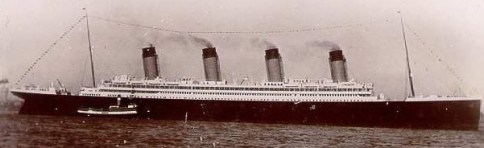
He was discharged from the Prince of Wales hospital on January 8 and sailed for Canada on board the S. S. Olympic. The Olympic, built in 1911, was a sister ship to the Titanic. In October 1914 she was converted to a troop ship designed to carry as many as 5,000 troops and served until after the war having carried more than 250,000 troops.
Another medical examination followed on February 27:
“ Extensive scar 10” in length. At present there is a small point of discharge in upper area of the wound. He has about 80% loss of power in the arm and cannot lift fifteen pounds without severe pain. Movement at the shoulder is limited about 20% and he cannot get his elbow above his shoulder. Can touch his head with difficulty. There is some atrophy of the arm and forearm –about ¾”- but he is right handed so this is not exceptional. It becomes stiff with cold weather and painful and tender with pressure. “Temporarily Unfit”. He should be under the observation of a medical officer, the wound should be dressed at regular intervals and he should be reexamined after three months convalescence.”
Once again on June 4, 1918:
“Complains of weakness in left arm and shoulder. Says he gets exhausted easily, cannot work very hard. Has a chronic cough, but has not coughed up any blood since December 1917. Cannot carry anything with left arm for any time. Arm gets weak and painful.”
There was a 25% disability that could be permanent in some degree. It is not clear to me exactly what the Medical Board recommended but Bill was discharged less than two weeks later. He married, had two daughters, moved a few times and finally settled back in Brighton. He died in 1962 at age 71.
Keith Roblin
While he was at the Canadian Convalescent Hospital in Epsom, he was treated for – “Penetrating flesh wound in thumb and palm of left hand” and was discharged on June 16, 1917 to the 6th Reserve Battalion with the following comments – “Hand now healed – had PT 3 and massage.” The 6th Reserve Battalion served to supply fighting troops to the PPCLI and 2nd, 21st and 38th Battalions.
Rather than returning to France, Keith was posted in England for eleven months. On September 28, 1917, at the Aldershot Command Gas School he was certified as a “First Class Instructor in Anti-Gas Drill”. In May 1918, he transferred to Headquarters Sub Staff to become a Company Sergeant Major/Instructor, where he served until December of 1918 when he was placed in line to return to Canada. Finally he sailed to Canada on board the HMT Canada on February 15, 1919 and was discharged in Kingston on March 17, 1919. He married and had one daughter. He died in 1978 at age of 82.
 Stories