In Aug, Frank Maheux wrote”
“Some old 21st soldiers after a bombardment, they will be white for a few minutes and start to cry. That (is) what you called shell shock. It is too hard on the nerves; you see all the shells exploding around us and between. You are asking yourself – I might be killed by the next one.”
21st War Diary:
“August 1 – The battalion commenced bathing today at the LaClytte Baths.
August 4 – Battalion paraded for a route march at 6 AM. Dress; Officers – Packs, haversacks, water bottles, glasses, steel helmets, smoke helmets, revolvers and ammunition. Other Ranks – Heavy marching order. Packs to be complete.”
On August 5th the entire Brigade conducted a march to: “improve the marching condition of all ranks and instill in all ranks the principles of march discipline.” A. Woodhead died that day.
After being in rest billets for the first week of August, the Trench Mortar Battery was at the front from the 7th to the 22nd, firing a total of 1,500 rounds, with 500 rounds on a very busy Aug 11.
A memorandum from the Brigadier on August 9:
“The Canadian Corps is moving to the Somme. The 2nd Canadian Division will probably move to a training area near St. Omer about the 25th of August. This information may be imparted to all ranks, but is not in any form to be sent to Britain or Canada.”
Maybe this explained all the recent marching. J. Gould died August 12.
Corrigall:
“The news caused great excitement and even pleasure. We had been in the Ypres Salient for a year and were so thoroughly tired of it that any change of front would have been welcome.”
 In this age of the computer it is hard to imagine the creation of paperwork that would follow. Not only would there be a massive quantity of orders issued at Division, Brigade and Battalion level, but the regular orders for troop movements, billeting, battle plans, reports, War Diaries etc. would still continue until the move took place. They would all be created, as originals and as many carbon copies as could be stuffed into the machine and still be legible , on a slightly more modern typewriter than the turn-of-the-century Underwood model.
On Aug 15, His Majesty the King visited the Canadian Corps with the following conditions to be observed:
“He particularly desires that there shall be no parades or lining of the roads. He intends to motor through the area and visit the soldiers in their billets, without any formality whatever.”
This inspection seems eerily familiar to the send-off to France by the King in September 1915.
A man in one of the units serving north of St. Eloi gave this description as they moved out for the last time:
“On the night of Aug 22 the battalion was relieved. They left the bone-dry trenches that could change so rapidly with the weather and which offered such a contrast in the winter. By comparison July and August were not unpleasant, the soil was workable, the dugouts were dry and when the day’s ‘fatigue’ was over, such men as were not detailed for duty would sit in the trenches and follow the course of an aeroplane soaring in the sky by the fleecy-white bursts of smoke, which gleamed against the deep-blue heavens. In these long evenings the birdmen and the skylarks in their lonely altitude were the only living things above the ground. Such dry warm days passed more quickly than the cold wet ones of winter and spring. Nevertheless the men were delighted to be relieved of this pestilential crescent.”
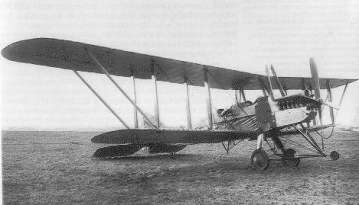 One such aircraft that Keith and Bill and others might have watched was the British RE 7 reconnaissance plane, which had been in service since the early part of the war . However, because it was underpowered, had a very small margin between its operating speed and its stall speed and was poorly armed, the BE 12 was currently replacing it. F. Thomas of the 21st Battalion died on August 21.
When the Trench Mortar Battery was relieved that same night, it began a march that would take them over 40 miles from outside Dikkebus to Nordausques with overnight stops at Reninghelst, Steenvoorde, Noordpeene and Nicaurut, arriving on August 28. During the march, the weather shifted from ‘cool and showery’ to ‘very hot’ and back to ‘cool and showery’.
Corrigall described the same march from the perspective of the 20th Battalion:
“We were all up at dawn making the usual preparations for a move. It was a cool morning and mists, bringing with them strong earthy smells, drifted slowly over the huts. We first had breakfast, then ‘fell in’, and by 6 AM, when we moved to take our place in the column, the sun was shining. As we marched westward and the rumble of the gun fire became ever more distant, we were all looking forward to enjoying two or three weeks out of the line. The countryside was at its best. Crops were beginning to ripen and red berries gave a glow to the hedgerows. In front of us stood Mont des Cats with its fine monastery perched on the summit and, beyond it, the buildings of Cassel glistened in the sunlight.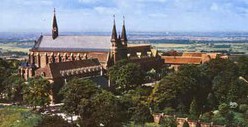 We marched steadily – at times getting glimpses of our column, snake-like as it wound among the hills and valleys – until noon, when we had the usual hour and a half for lunch and to feed the animals. After that break, the march continued along tree-lined roads until about 4 PM when we entered our billeting area, near the billets we had occupied after our arrival in France, almost a year previously. Between marches we were lectured on the operations at the Somme. These described the conditions of the ground, the methods of attack, the system of advancing to ‘limited objectives’ behind heavy artillery and machine gun barrages, and also the means of cooperation between aircraft and infantry.”
It was hoped that the infantry would be able to follow the artillery’s creeping barrage and engage the enemy before their machine guns could be brought into play as the barrage moved farther on. Tied in with the moving barrage were a series of lines drawn on battlefield maps “limited objectives”, which were to be reached and consolidated before the barrage moved again. All of this activity was timed to the minute. Both these concepts were to be employed at the Somme to a much greater extent than ever before.
Corrigall:
“Our route followed the southern slopes of Cassel Hill, giving us a panorama view of the rich agricultural country which lay to the south, dotted with red-roofed farm buildings and villages nestling in wooded groves. On Aug 27 we exchanged our Ross rifles for the British Lee-Enfield models. We reached our destination on Aug 28. The civilians were all very kind and made us comfortable. We were in a large area where there was ample space for all types of training. Close by we had practice trenches for company and platoon attacks, parade grounds for drill, pits for bombing and gallows for bayonet fighting. Further out there were larger areas for battalion and brigade schemes and excellent rifle and machine gun ranges. We had ample scope for recreation, including football, baseball and swimming.”
28th Battalion History:
“Few survivors will forget the feverish days of early September 1916, when so much had to be learned in so little time. It was a new feature of Sir Julian Byng’s corps to explain the exact meaning of plans and objectives to every man in the regiment. It was a newer feature to inform the humblest private that, in the heat of battle, he may be called on to fill the place of some fallen senior, to command his section, to rally his platoon or even to lead his company.”
 Stories