Roberts:
“From the Somme, the four Canadian Divisions, united into an Army Corps in all respects complete within itself, were removed to the north of Arras, to take into their competent keeping that vital area lying under the menace of Vimy Ridge and the impregnable outposts of Lens.”
The 4th Brigade was again on the march.
 Corrigall:
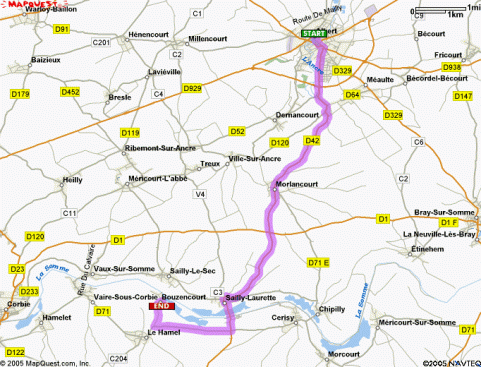
“We began our march out, passing under the Virgin at Albert and taking the road to Bouzencourt (about eight miles – see above). As we marched along this road it was lined on either side with the usual crowd of men from the units bivouacked in the Brickfields, to see us pass. Weary as we were, we tightened up our ranks, picked up the step and cocked up our chins. For we had completed two tours of the Somme. We had taken all our objectives and held them until relieved. Only our depleted ranks told at what cost.”
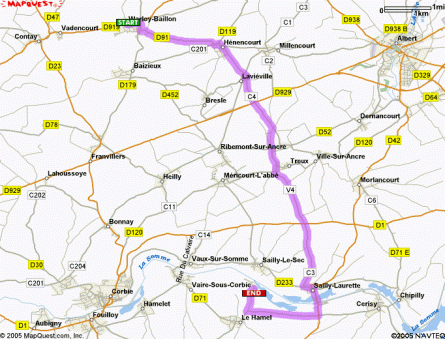
This same statement also applied to the 21st Battalion as it followed two days later. On October 7, they had a four-hour, ten-mile march to very good billets at Warloy (top left on map). I assume this roundabout two-day route from Albert to Warloy was required to find adequate billets en route. Late on that day, two companies were bused sixteen miles from Warloy to Fieffes, where they were joined the next day, October 8, by the rest of the Battalion, who also came by bus.
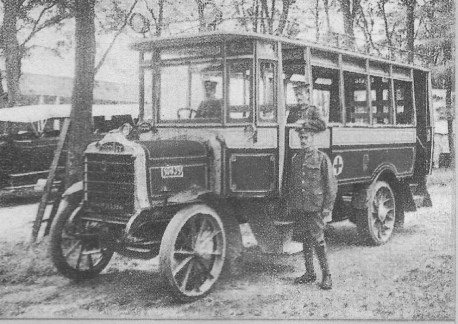
The picture shows a British bus in France in 1915, so I’m assuming their bus would be similar. Eighty reinforcements were received that day and they stayed in Fieffes for three nights. On October 11, they began a series of daily marches, which took them from Fieffes to Remaisnil (10 miles) to Sericourt (8 miles) to Marquay-Monchy (8 miles) and finally to Divion (8 miles), where they were billeted for two days.
Corrigall:
“On the whole we had enjoyed the days of marching and the changes of billets, although our roads had led through a monotonous countryside, turning and winding along crests and down valleys in endless succession. We were now in the heart of the coal mining area, which surrounds Lens. On our way into the line, we passed many mine heads surrounded by villages, where the inhabitants still occupied their homes, undisturbed by shell fire. The Germans, who hoped soon to occupy these parts, had left them in this state of preservation for the sake of the natural resources.”
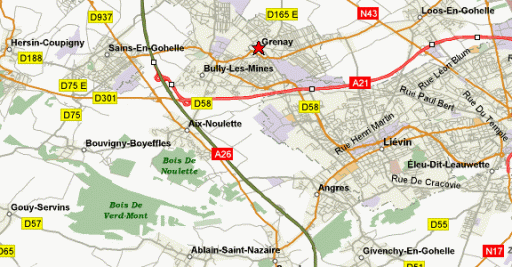
On October 17, two weeks after they had left the trenches at the Somme, the 21st relieved the British 10th Battalion Royal Fusiliers in reserve at Bully Grenay (Shown on the map as Bully-les-Mines and Grenay – See red star) and Corrigall’s 20th Battalion relieved the 18th Battalion in the front line trenches.
Corrigall:
“The organization of the billets (at Bully Grenay) was the best that we had ever seen. Everything seemed ready to receive us. Everyone was comfortably housed, and the inhabitants were most hospitable and friendly. We first had inspections of clothing and equipment, and then started on the usual programme of training. We found the trenches a haven of rest. They formed a network around the village of Cite Calonne, and were fairly well built and dry. Those of us not on duty had very comfortable quarters in the cellars nearby. We walked safely along the streets not directly exposed and could sit in the warm sun, passing the time of day on chairs propped against the walls, within six or seven hundred yards of the German lines. Vimy Ridge was on our right and in front of us stood Lens. We spent our time on duty improving the trenches and wire.”
While in reserve the 21st had one route march and, to help integrate the new recruits, daily instruction was given in gas drill, bayonet fighting and fire control but the biggest hit would be –
21st Battalion War Diary:
“Third week in October – During the week the Battalion was bathed and received, in the majority of cases, fresh underwear.”
With Keith away for six days on a gas course, the next turn in the front line came for the 21st on October 23. The days were described as quiet, without rifle, machine gun or artillery fire, but one man, C. Roberts, was killed and one wounded while on night patrol. The weather that week was being described as fine and cold. They were relieved on October 29 and moved back to Calonne in support. There were numerous gas alerts around this time but very little happened.
Corrigall:
“Here in support, we were called upon to furnish over 200 men for work on the defences in Calonne. When darkness fell, the remainder would light fires in braziers near the village. Around each blaze a group sat and smoked, played cards, sang marching songs or talked. When the working parties came back, any remnant of the day’s rations was cooked and a feast was made.”
McBride:
“We were established for the winter north of Arras. At this time war had become a business to us, not an adventure of a few months or a year. We settled down to it in a business-like manner, rotating once again through the supports, the front line and out again. We had good, fairly dry trenches.”
Corrigall:
“The rainy season had begun, and we looked forward without pleasure to the five months of winter. Nevertheless the days in this part of the line passed quietly and we were grateful for the rest.”
Morton:
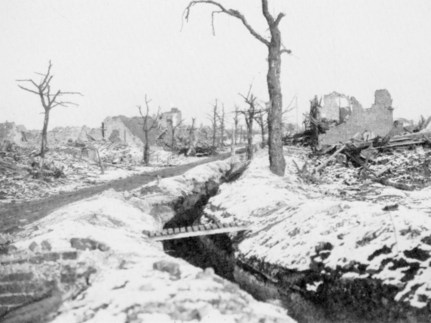
“The winter of 1916-1917 – the worst in half a century- added to any soldier’s ordeal.”
Maheux:
“Them countrys France and Belgioum I wouldn’t give a cent for it, you can’t keep nothing dry everywhere wet. We can make no fire it is worse than ever. I’ll say to myself Angeline is sleeping now. I don’t know what I’ll give to be beside you instead I’ll have my rifle beside me. You can see for a poor bugger not used to think so much that will drive a fellow crazy.”
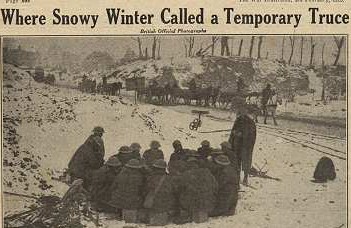 For the next few months, reports indicate it was a cold, dull, dreary existence. Except for patrols occasionally bumping into one another and creating unplanned skirmishes, very little seems to have taken place, although W. Hutchinson died accidentally and C. H. O’Leary, P.J. C. Junkin and R. Gregory were killed. The rest were left to endure the cold, rats, lice, lots of work parties and some training, while wondering what might happen in the next hour or day or tour in the trenches. One exception was the night of November 30, when a party of Lieutenant Cottam and thirty Other Ranks tried to enter the enemy’s trench seeking intelligence data and prisoners.
21st Battalion War Diary:
“Nov. 30 – They were discovered and the officer in charge was killed. The balance of the party had to retire leaving his body on the enemy parapet.”
Another raid was attempted on December 3 but it was discovered that the artillery and trench mortars had not cut the enemy wire enough to permit access to the enemy trenches. All nineteen of the party returned but there were casualties. Another accident killed M. Allen.
4th Brigade War Diary:
“December 25 – A Christmas tree was held for the 200 children of the village.”
December 25 found the 21st in the front lines and no special mention is made of their Christmas until a few days later at Bully Grenay in reserve. J. Patterson was killed on December 28.
21st Battalion War Diary:
“December 29 – The Battalion had their special Christmas dinner which was appreciated by all ranks.”
 Stories